
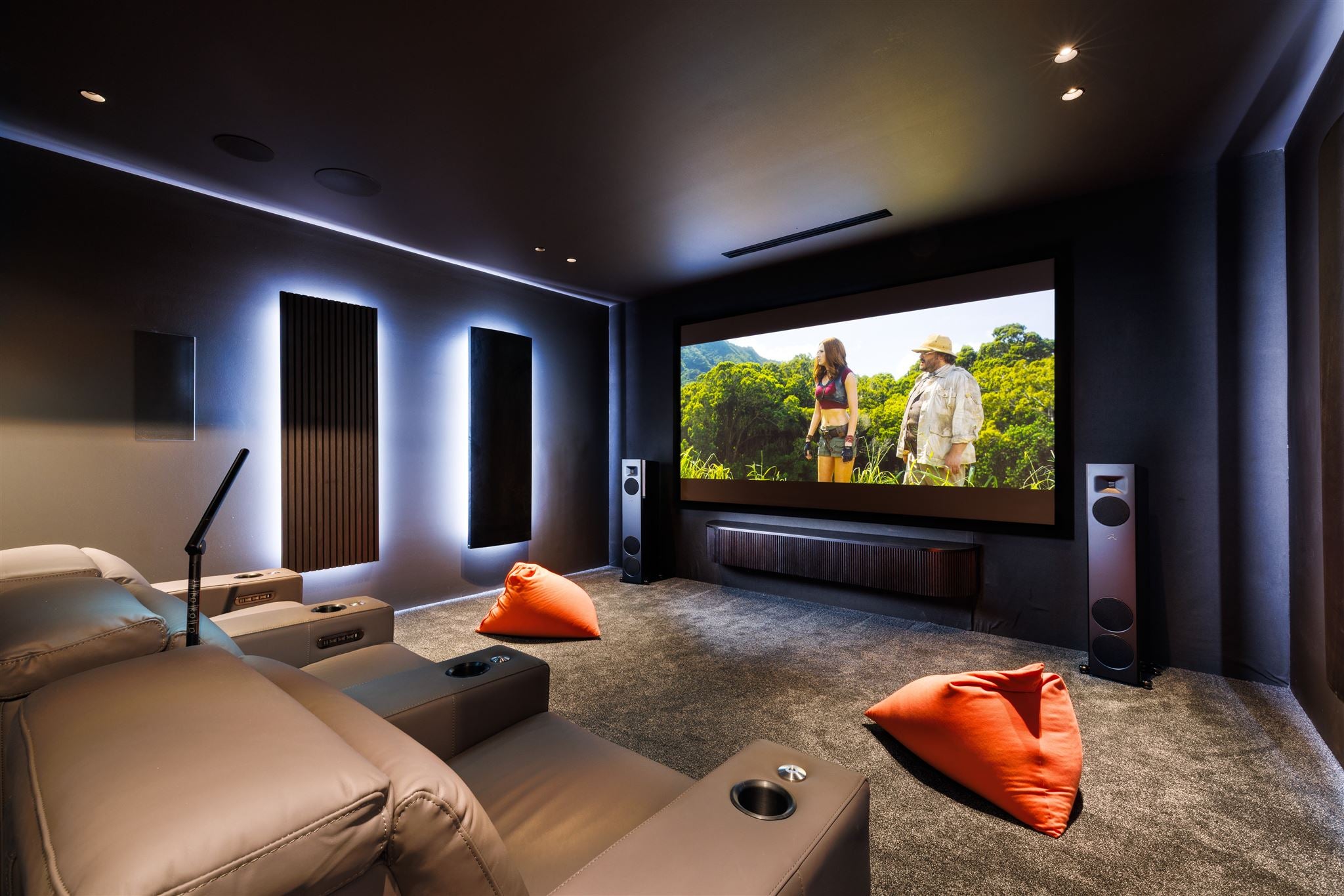

When you think about what makes a great cinema experience, it's not just the image on the screen, but the feeling that sound is happening around you, pulling you completely into the story. That quality of immersion is something most home theatres chase, but few fully achieve.
The missing ingredient? Overhead audio.
With ceiling speakers, sound takes a three-dimensional quality that mirrors how we hear the world. A well-planned system does more than add height channels, though. It shapes how the room looks, how it functions day to day, and how everything ties together cleanly. Here are five reasons it's worth getting right from the start.
1. They Deliver the Overhead Sound Dimension That Changes Everything
Most home theatres are designed around a horizontal plane of sound, all speakers operating at roughly ear level. It's effective, but can sound flat.
Sound in the real world comes from every angle. When your audio system can replicate that, something shifts, giving you an experience as the filmmaker intended. Home theatre ceiling speakers make that possible.
Horizontal speakers, no matter how good, can't replicate this. The overhead dimension requires speakers positioned above the listening plane. That's what in-ceiling speakers do, and why they're increasingly considered a foundation of serious home theatre design, not an optional extra.
2. They Preserve the Interior You've Designed
A beautifully crafted media room or home theatre deserves an audio solution that respects it. Freestanding speakers, no matter how acoustically impressive, demand visual real estate. They need floor space, cable management, and can throw off the room's architecture if poorly designed.

An in-ceiling speaker system disappears. Installed flush with the ceiling plane, painted to match, they become part of the room rather than an imposition on it. The result is a room that feels intentional. Joinery, lighting, seating, and acoustic treatment all look cohesive, and nothing is competing for attention. It gives your space a sense of calm you’d expect from a premium home cinema.
Brands like Martin Logan, Paradigm, and Theory Audio make in-ceiling speakers that perform at reference levels while disappearing entirely from view, some with paintable grilles to blend in with the room.
3. They Work Better in Multi-Purpose Rooms
Not every home cinema is a dedicated, sealed, light-controlled room. Many of the best ones live in spaces that also function as living rooms, family areas, or open-plan entertainment zones.
This is where ceiling speakers earn their place. An in-ceiling speaker system frees up floor and wall space for other design elements, such as furniture, artwork, or additional technology. It also makes them ideal for rooms with limited space or for homeowners seeking a minimalist aesthetic.
4. Placement Can Be Optimised for the Room's Architecture
One of the genuine advantages of in-ceiling speakers is that their placement is driven by both acoustics and architecture.
The best theatres are the ones where audio planning starts early. When ceiling speakers are coordinated with framing, lighting, and ceiling details, they disappear visually and perform exactly as intended. Ceiling depth, joist spacing, lighting layouts, HVAC runs, and framing decisions all influence where speakers can go, and once drywall is installed, flexibility drops sharply.

This is why consulting an AV specialist before construction or renovation is so valuable. A speaker placed in the right acoustic position produces measurably better sound. Coverage is more even, imaging is more precise, and the system works with the room instead of against it.
5. They Integrate with Your Broader AV System
A well-designed home cinema isn't a collection of separate products, but an integrated system. Ceiling speakers sit naturally within that ecosystem: connected to a central AV processor, controllable via a single interface, and scalable as the system evolves.
They also work cleanly with broader integrated home technology plans, making it easier to align audio with lighting, shading, and control systems. That means the same installation that handles your cinema can extend to whole-home audio, automation that dims lights and adjusts sound simultaneously, or future-proofing for format upgrades down the track.
Done well, the in-ceiling speaker system is there when you need it, completely unobtrusive when you don't.
Start with a Thought-Out Design
The technology is only part of the story. The performance you get from home theatre ceiling speakers depends enormously on how they're planned: coverage angles, room treatment, speaker selection relative to room dimensions, and integration with the rest of the system.
That's a conversation worth having early. If you're designing a home theatre or media room and want to understand what's possible, book a consultation with the Amplify AV team. We'll work through your space, your ambitions, and the options that make sense for how you actually want to live with it.


