
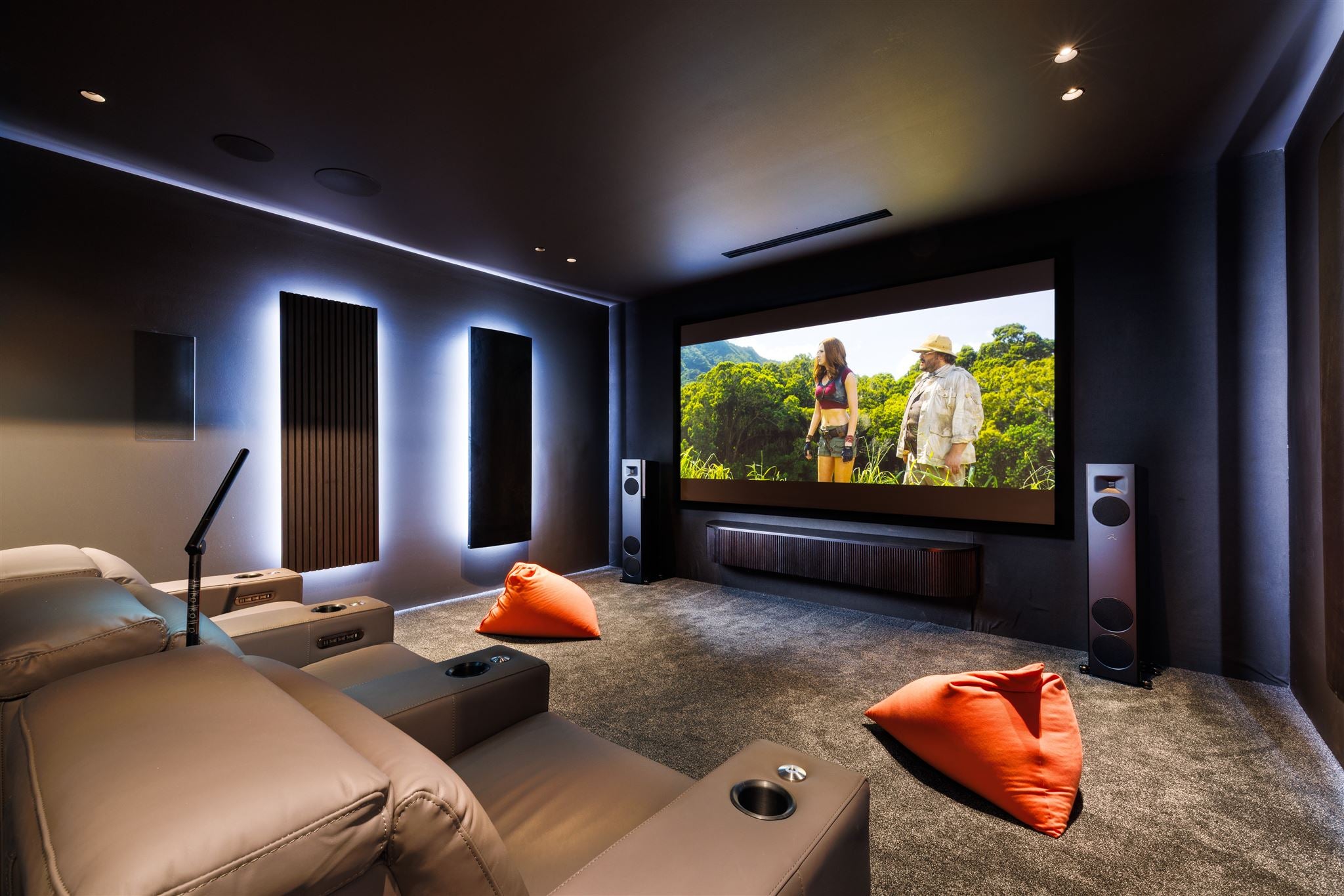

Most people spend weeks researching screens and speakers before committing to a home theatre system installation, and far too little time considering the room those components will live in. That's usually where things start to unravel. The result? A system that looks impressive on paper and underwhelms in practice.
If you're planning a home cinema setup, these mistakes are worth knowing before you start.
Key Insights
- The most common mistake isn't choosing the wrong equipment, but doing so before understanding your room.
- Acoustics, speaker placement, and cable infrastructure account for the majority of real-world performance issues.
- Home theatre design should happen at the architectural stage.
- Multi-room home audio systems require structured planning to avoid dead zones and integration headaches.
- A professional consultation early in the process saves significant money and rework later.
1. Buying Equipment Before Designing the Space
This is the one that catches almost everyone. You find a package you love, bring it home, and then try to make it work in your room.
Every room has unique dimensions, surfaces, and sight lines that affect how audio and video perform within it. A screen that's perfect in a 5.5-metre room will feel overwhelming or inadequate in a different space. Speaker choices that suit a purpose-built cinema room may perform poorly in an open-plan living area.
Knowing your space’s dimensions, its purpose, who will be using it, and the type of experience you’re after is the first point in home theatre design. This helps narrow down to the right equipment.
2. Overlooking Acoustics
A major point commonly overlooked in home audio systems is how sound interacts in your space. In a room with high ceilings and hard floors, sound bounces off every reflective surface, producing an echoey quality. In small rooms, loudspeakers create resonances that result in inconsistent sound throughout the room.
Seating, flooring, and even wall finishes all affect acoustics, which makes it worth addressing at the design stage. Working with an AV designer from the outset means these decisions are made alongside your interior designer, ensuring a well-designed space aesthetically and acoustically.
3. Wrong Speaker Placement

Where your speakers go matters. Speakers pushed against back walls or into corners block sound paths, robbing you of the stereo imaging and three-dimensional spaciousness. For surround sound setups, the right speaker placement with furniture can give you that true enveloping experience.
Plan your speakers around your primary listening position. Choices like in-ceiling speakers and in-wall speakers offer a clean look without compromising placement logic.
4. Prioritising Specifications Over Performance
Many fall for numbers like frequency response or high lumen figures in their home theatre system installation. But they forget, it’s how your setup performs in your space and works as a whole that’s essential. A well-matched set of components, properly positioned, calibrated, and suited to the room, will consistently outperform a collection of high-spec pieces that don't work well together.
Browse our curated range of home theatre projectors, TVs, speakers, and soundbars to understand how component selection changes with room context.
5. Ignoring Power and Cable Infrastructure
Electrical planning is often overlooked and is more expensive to fix. Running your whole system off a shared circuit can trip breakers, and components on different circuits can introduce a persistent audio hum. Cable runs are equally important. No conduit, improper cable paths, lack of space for HDMI and speaker cabling can result in a total redo that’s completely avoidable.
Plan every cable run before walls are closed. Bring up dedicated power circuits to your electrician and AV installer, so nothing gets missed.
6. Choosing the Wrong Screen Size or Viewing Distance
Bigger isn’t always better. You’re straining to take in the full picture on a screen that’s too big, but you skip immersive quality when it's too small.
A general rule of thumb is to multiply your screen's diagonal measurement (in centimetres) by 1.5–2.5 to get an approximate ideal viewing distance. Room shape, seating layout, and flat panel vs projector screen all affect your result. Work out your viewing distance and map it out with your AV consultant before purchasing anything.
7. Neglecting Seating

Seating is essential in home theatre design. Without proper seating, the best audio-visual setup can only do so much. Sit too close to the rear wall, and the bass builds up. Too low, and your ears drop below the speakers' ideal axis. And no one likes dealing with an uncomfortable chair. Consider acoustic positioning, sight lines to the screen, and ergonomic comfort when you’re investing in quality home theatre chairs.
8. Leaving Out Multi-Room Audio
A multi-room home audio system is one of the best things you can add to a space, but retrofitting it later can be a pain.
If you’re working from the ground up, create listening zones before your walls go up. On a budget and going room by room? Plan your multi-room audio system at the same time as your home theatre and home automation system, and save yourself the headache. Use a consistent platform so every upgrade integrates with the rest of your home’s technology.
9. Separating Technology and Interior Design
Plan your interior and home audio systems together. When done individually, you risk ventilation-poor cabinets or joinery without a way to route cables through. Bring your AV consultant into the design process early for home audio visual solutions that perform and a space that looks good.
10. Forgetting to Plan for Calibration and Future Scalability
Home theatre system installation isn’t the last time. Calibration (speaker distances, levels, crossover points, and display settings) gives you a personalised experience that factory defaults can’t.
The best systems are also designed with room to grow without needing a full rework. Build your system on a platform that can accommodate future upgrades.
Get Your Home Theatre Design Right from the Start
The mistakes on this list have one simple solution: an expert consultation at the start of a project. Connect with Amplify AV to ensure your AV system is tailored from day one.
Learn more about how a consultation helps avoid common mistakes.
FAQs
What's the most common mistake when installing a home theatre?
Buying equipment before thinking about home theatre design. Most people find a screen or speaker setup they like, then try to make it work in their space. The room’s size, shape, layout, and surfaces should inform every equipment decision. Starting with a clear home cinema setup design leads to better outcomes.
Should I install a home theatre system myself?
For more involved setups, like projector systems, in-wall or in-ceiling speakers, multi-room home audio systems, or integrated smart home control, we strongly recommend professional installation. Fixing a poorly installed system can cost you more than getting it right the first time. We work with a trusted network of installers who know each system inside out, ensuring a smooth process.
How early should I involve an AV consultant when building or renovating?
As early as possible, ideally at the design development stage. Cable paths, equipment locations, acoustic considerations, and power requirements should be sorted before walls are built and floor plans are finalised. When you leave home theatre system installation until fitout, you’ll have to build around what you have rather than have a built-in setup. Get in touch with Amplify AV today for a bespoke entertainment experience.


