
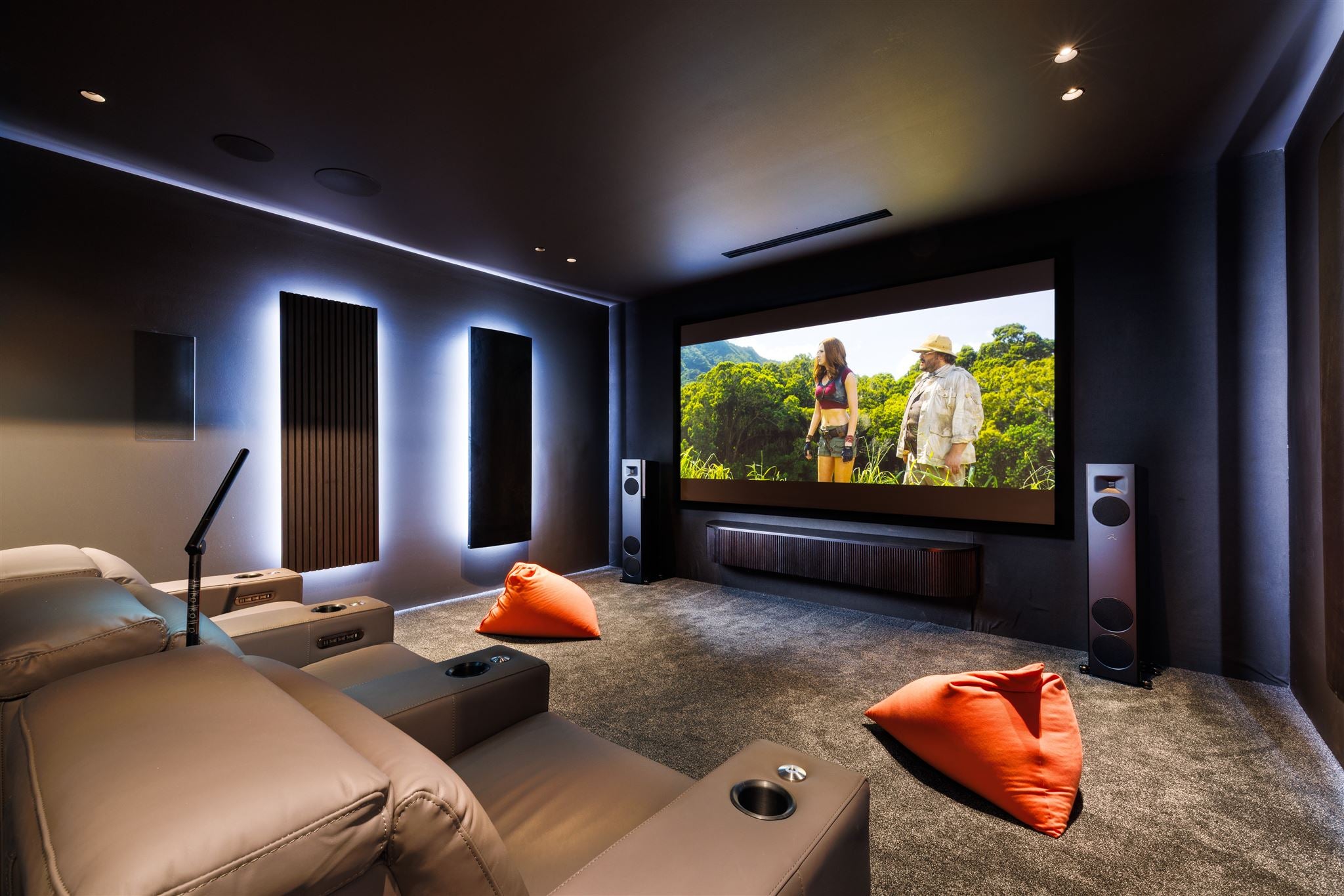

A great home cinema setup often comes down to getting the right elements working together seamlessly in your space, for the way you actually watch or entertain.
Whether you're starting from scratch or converting a spare room, this guide on the ideal home cinema setup for beginners walks through the decisions that matter most, in the order they should be made.
Key Insights
- Room acoustics shape your sound quality as much as the speakers themselves
- Display choice depends on your lighting conditions, not just screen size preference
- A home cinema setup checklist helps you sequence decisions in the right order and avoid costly mistakes
- Planning cabling and power before walls are closed saves expensive retrofits later
- Even a modest budget delivers a genuinely cinematic experience with the right choices
How to Build a Home Cinema: Start with the Room
The most common mistake is buying equipment before understanding the space. Ceiling height, natural light, room dimensions, and wall materials all influence which components will actually perform.
Hard surfaces reflect sound unpredictably, whereas soft furnishings absorb it. Adding acoustic panels early, ideally before furniture goes in, makes a measurable difference to clarity and bass response without compromising the room’s aesthetic.
Not sure where to begin on the design side? Our guide on what to ask your home cinema designer before starting your project covers the questions worth asking before a single piece of gear is purchased.
Display Choices for Any Home Cinema Setup
This is where most people spend the most time debating. The right choice depends on your room.
Home cinema projectors deliver a scale that no TV can match, and work beautifully in rooms where you can control the light. For spaces with ambient light or open-plan layouts, Sony TVs deliver extraordinary picture quality without needing to dim the room first.
A solid rule of thumb: your first row of seating should sit roughly 1.5 to 2 times the screen width away for a comfortable, immersive view. Still weighing up both options? Our projector vs TV guide breaks down the trade-offs in detail.
Sound: The Part Most People Underinvest In
The display gets the attention, but sound is where a home cinema setup goes from good to cinematic. A 5.1 surround configuration (five speakers plus a subwoofer) transforms how dialogue, effects, and music feel in a room.
In-ceiling speakers keep the room looking clean while delivering immersive, evenly distributed audio. Pair them with a quality AV receiver to manage audio routing, and a dedicated subwoofer for the low-end for action scenes you can feel, not just hear.
Home theatre 5.1 packs bundle the essentials together if you'd prefer a cohesive starting point.
If you’re between bookshelf vs floor standing speakers, understanding your acoustics does wonders in making the right decision.

Seating, Cables, and the Details That Finish It
Seat placement affects both sound and sightlines. Too close and the screen dominates uncomfortably, but too far back and you lose the sense of immersion.
For dedicated rooms with two rows, tiered risers make a real difference. The chairs themselves matter more than most people expect, too, and cinema recliner chairs are a go-to in many spaces for a reason.
On the infrastructure side: quality HDMI cables ensure your 4K HDR signal travels without compromise. Remember to plan your power points and cable routes before walls are sealed. It's an essential part of how to build a home cinema that’s worth getting sorted early.
If you want a home cinema setup checklist to work through before your build begins, the Amplify AV team can walk you through one at the Experience Centre.
Put It All Together
The best home cinema setups are designed as a whole, not assembled piece by piece.
This home cinema setup guide for beginners is just a starting point, not a prescription – every room and household is different.
Need expert help? Our team offers end-to-end home cinema design and installation, complete with a demo space in Port Melbourne where you can hear and see what's possible before you decide.


