
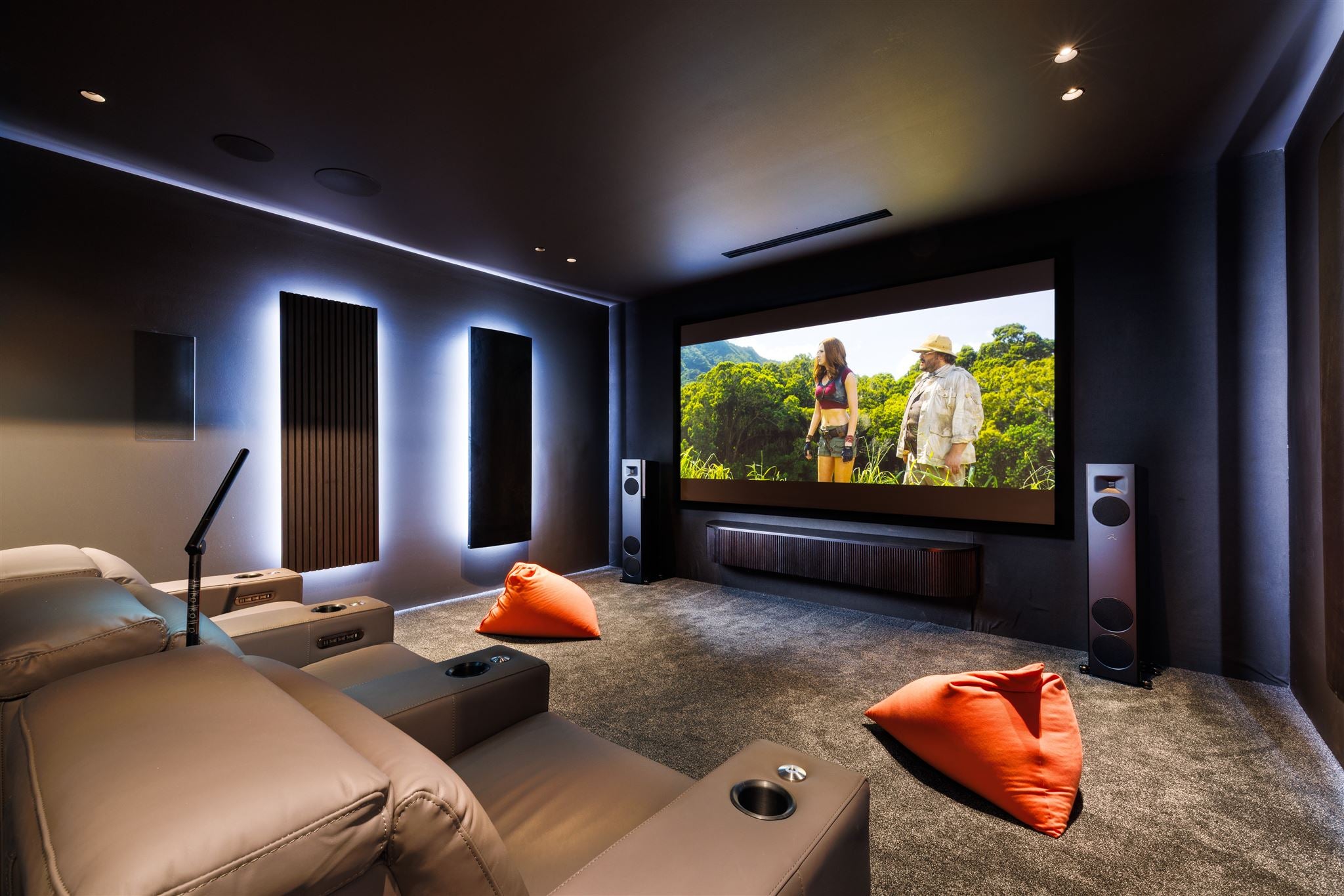

Most TVs sound underwhelming. The screens have become thinner and better, but the speakers inside them have paid the price. Buying a soundbar is the most practical upgrade you can make to a living room, but with hundreds of options at wildly different price points, the choice isn't always obvious.
This soundbar buyer's guide cuts through the noise (literally).
Key Insights
- Room size and placement significantly affect how a soundbar performs
- A soundbar with a separate subwoofer delivers noticeably richer bass than an all-in-one unit
- Dolby Atmos support doesn't guarantee a better experience unless your content and room support it
- Connectivity matters as much as audio quality. Always check HDMI eARC compatibility before buying
- A soundbar is a great starting point, but it's not always the endpoint for a cinematic home setup
Matching the Soundbar to Your Room
Before thinking about brand or features, think about where it's going. A soundbar that performs brilliantly in a compact lounge can sound thin and directionless in a large open-plan living space. The reverse is true too. An oversized bar in a small room can overwhelm.
As a general guide, smaller rooms (under 25 square metres) suit compact 2.0 or 2.1 channel bars. Larger spaces benefit from 3.1 or 5.1 configurations with a separate subwoofer, which adds the bass extension that built-in drivers simply can't produce at low volumes.
How to Choose a Soundbar: Features Worth Paying For
When thinking about how to choose a soundbar, not every soundbar feature translates to a better listening experience. Here are a few things worth understanding about your TV, speakers and soundbars:
- HDMI eARC: This is the connection standard that passes high-quality audio from your TV to the soundbar. Without it, you're often limited to compressed audio. Most modern TVs have an eARC port, and your soundbar should too.
- Dolby Atmos and DTS:X: Object-based audio that creates a sense of height and space in the sound. Worth having if you're streaming from services like Netflix or Disney+, which support it, but only if the room and placement allow for it to work properly.
- A separate subwoofer: Whether wired or wireless, a dedicated subwoofer transforms how low-frequency sound feels. Action scenes, music, and even dialogue clarity all improve when the bass isn't competing with the mid-range drivers.
- Multi-room compatibility: If you're running or planning a whole-home audio setup, look for soundbars that integrate cleanly with your existing system. Sony's range connects natively with Bravia TVs and home automation platforms, while Paradigm and Theory Audio options can be paired with compatible AV receivers for a more expanded setup.
What Buying a Soundbar Won't Fix
A soundbar is a genuine upgrade. But it's worth being clear about what it is: one speaker in one direction. Even the best soundbars with virtual surround processing can't fully replicate the experience of discrete speakers placed around a room.
If you're setting up a dedicated home cinema or a room designed for immersive viewing, it's worth understanding where a soundbar fits and where a full surround sound configuration makes more sense. The bookshelf vs floor standing speakers guide is a useful read before you commit either way.
For most everyday living rooms, though? A well-chosen soundbar is the right call. And the best soundbar for home theatres sits a step above casual Bluetooth options, given that they’re purpose-built for extended viewing, not just background music.

Connectivity and Integration: Questions to Answer Before Purchase
- Does your TV have an HDMI eARC port? (It should be labelled on the back)
- Does the soundbar support your streaming services natively, or does it rely on your TV to pass the signal through?
- If you're wall-mounting, does the bar come with the right bracket, or is it a separate purchase?
- For apartment or terrace living, is there a night mode or dialogue enhancement feature for lower-volume watching?
Our soundbars range covers options across all these configurations, from compact stereo bars through to premium Atmos setups with subwoofer and rear speaker packages.
Getting the Decision Right
The spec sheet gets you most of the way there when buying a soundbar. But the best way to buy a soundbar is to hear it in a room that resembles yours. Features that look identical on paper can sound very different in practice.
It’s important to understand how your AV components work together when planning an entertainment space. If you're weighing up a soundbar as part of a broader home cinema setup, it helps to see how the pieces fit before you decide.
Not sure where a soundbar fits in a broader setup? Our guide to how a home cinema consultation guides your design and equipment choices is a good place to start – or visit our Port Melbourne Experience Centre to hear the options side by side.


